Saturday, 26 November 2011

Crowd Sourcing - Further Development

So I thought I'd go out and try a little crowdsourcing for myself.

Armed with some gloves, thermal socks, and just a pen and pad of paper to my name, I hit the streets of Sheffield and started asking the residents of the city if they'd mind writing me the word "ALIGHT". It could either be in normal handwriting, or in a creative funky way. Either way, the people of Sheffield would be represented by their personality and style, ideal for my montage theme.

The idea was to get as many different forms of writing and text and visual aid in order animate a little title sequence, possibly for use in the background of my animated montage in a fly by section perhaps. Plus, it would help spread the word of the event, and inform those who might not even be aware of the great things happening next year.

Some people were cool, some were for want of a better word, total dicks, but all in all it was an interesting experiment to say the least! In the 2 hours I was out there, I managed to get over 20 handwritten samples. A far cry from the 500 I would have loved, but that's the point of these experiments I suppose, as what ideas you have in your head might not work in a practical sense.

The actual writing down of the word didn't take long at all, most of the time was spent telling people about the event, as obviously they were curious about what I was asking of them. Another hurdle was getting people to actually stop, I think many thought I was trying to sell them something, haha!

But for the ones that did, I was truly thankful for, and glad I went out there and did my little test! I think I got what I was after, and might even do it again with another idea if I do chose to go with the animated montage piece.

The collected signatures are as follows...


One things for sure, the folks of Sheffield aren't the most creative of folk are they... haha! Just messing, they did great I think, and looked forward to assembling them as one. There were a few more, but some couldn't be used as they didn't scan too well, but I still got enough down to make a little animation just to get them up and running...


Like I said, I would probably use the sequence as a fly by animation in the background of my montage, but for now I'm just glad I got out there and gave this crowdsourcing a go for myself!

It's a nice feeling knowing that every little piece is from a bigger puzzle, and it would be my task to arrange it all. I think part of being a designer is having control over your projects, but such an understated beauty can come from relinquishing that control, and handing over the reigns to others. Unexpected results inevitably follow, and ideas can come from places you never even considered.

This is also effective in the sense that as a designer, it's all too easy to lose that creative spark, or start lacking ideas and become repetitive. The great thing about this exercise is that there's never a dull idea, and while a title might look similar to another for example, knowing that they're from totally different sources gives a project that vital freshness it might lack if only handled by one single designer.

Friday, 25 November 2011

Further Research - Animating Stills

The following is a good example of still images being taken, cut, pasted, edited, and animated in order to create a whole new piece entirely, one that provides life and movement where there wasn't any before. It's the intro from a surfing documentary called Riding Giants, and uses both old photographs and suitably appropriate drawn artwork to make the piece fit the surfing theme. I think its a great example of just what can be done with simple still images, if given the time and vision to make them work on a much more impressive scale...

EDIT - Sorry about the lack of sound, their were uploading issues, but the main focus is the visual anyway!


The documentary is from 2004, and this technique has since been used countless times since, in many equally as creative and sometimes even more impressive ways. It's a fantastic way of paying tribute to our documented past by using actual images of the time, with today's digital motion technology, as well as celebrating nicely polished artwork by incorporating hard drawn sketches alongside it.

It would be fun to play around with still images like this and create something that moves purely from images that originally didn't, and never intended to.

In a way it even harks back to the old Terry Gilliam Monty Python animations, where a similar method was done using old photos in order to create something set in motion, albeit something crazy and random...


The technique itself does have a humorous feel to it, and in a sense, can only be taken so seriously as a result. It's probably not serious enough for what I want from this project, but it's certainly a great insight into how the process itself works.

Thursday, 24 November 2011

Test - Bringing Life to Still Imagery

I took the photo I'd previously found of the old Sheffield City Hall and attempted to bring a little life to it. Not too much, but in trying to keep it subtle just enough that it gave the slight impression of movement, so as not to over complicate things.

The image I was working with was this one...


I gave the image a new background, animated the sky and clouds behind it, made the whole thing look even older by setting it against an old, rich, canvas texture, and stuck an actual person in there too to have someone walking past.

While the example I did was simple and basic, I realise the final product would have to be much more involved and dynamic in order for the idea to work on a much bigger scale. But for now, it was just a test, and here's how it turned out...


As you can see, pretty straight forward, and not too far removed from the test animatics I did for the last project, so the good thing is I'm kinda familiar with the process already. I do however wish to push myself a little more, and have no intention of just staying in my comfort zone. I'm here to learn, and I'm here to improve, and so my finished piece will be much more creative.

Hopefully. :)

Wednesday, 23 November 2011

Research Into Animating Still Images

While putting some time into my research looking at the animation of still, static images, I came across the following cool innovation.

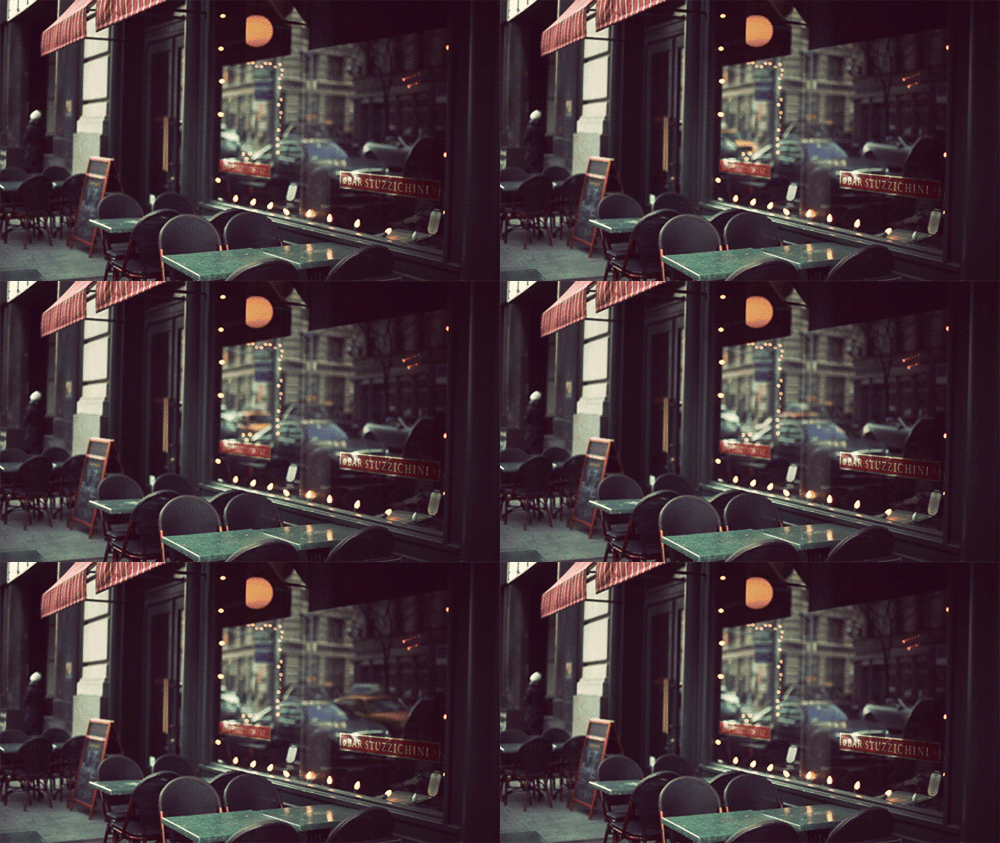
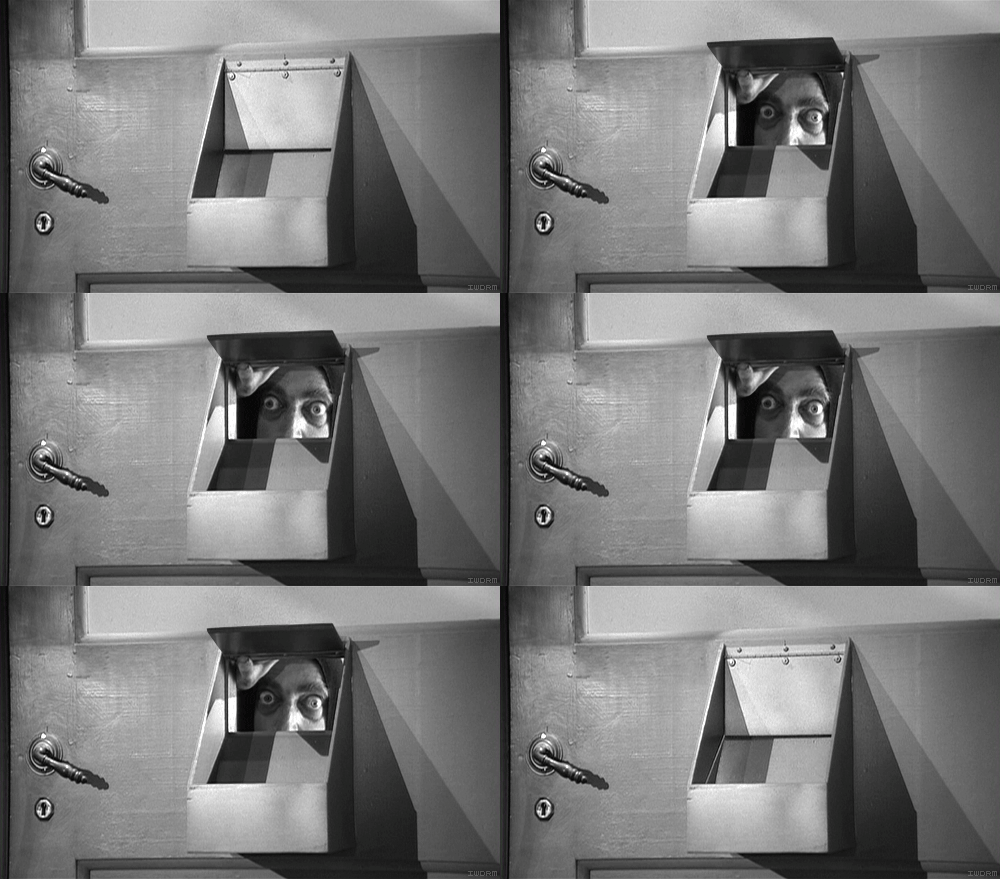
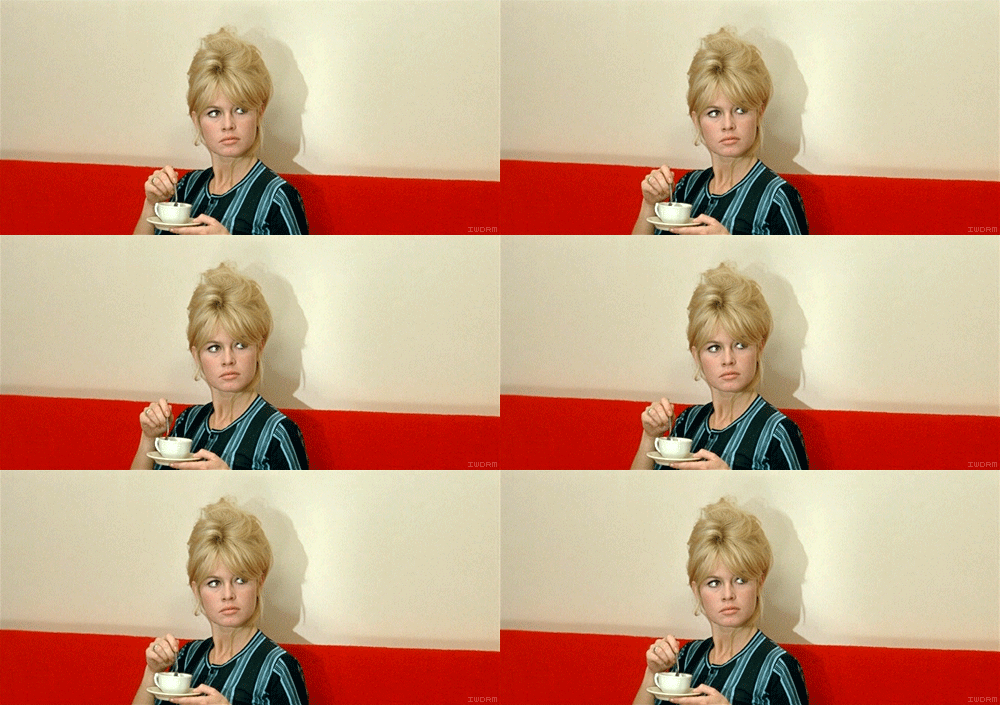
It's called Cinemagraphy, and is a cool technique used to blend still images with actual moving footage. It was actually introduced by a New York fashion photographer called Jamie Beck in collaboration with a motion graphics designer named Kevin Burg.

Jamie says “We wanted to tell more of a story than a single frame photograph, but didn’t want the high maintenance aspect of a video…cinemagraphs were born out of a need to tell a story in a fast digital age.” 

Since they started the idea, many more have taken it and run with it further, to create some truly awesome cinemagraphs. They're kind of like really sophisticated and well refined animated gifs, and look really cool in motion, even cooler if you don't expect them to be animated!

Anyway here's some of the ones I found which impressed me most. They might take a moment to load properly, so bare with them, and enjoy!

What I like about them is how manageable they are. They take up less space than a video file, have the artistic look and feel of fantastic still photography, and an amazing potential to tell quite a story. I believe there's alot that can be done with the idea, and look forward to both seeing how it grows, and also, playing with it myself.

It's an effective and impressive way to animate still imagery, and one that could suit my own idea to a tee.

Tuesday, 22 November 2011

Building my Ideas - Sheffield Past & Present

I'm liking the idea of showing old Sheffield transitioned with the new, and just wanted to try a few things out in order give the idea a little life and to try and see how it might look on a bigger, more realised scale. I'm holding off at this point to see which idea flies before I press on and commit fully, I think the upcoming pitch will help and I should get some good feedback on where this is heading. But for now, I just wanted to see what I could do with the idea of historical transitions.

So I made a quick test of showing 3 separate images, from 3 different eras, of 1 specific location, in this case, Sheffield City Hall. I managed to find 3 similar enough looking photos that clearly show the building at three different points in its history, and wanted to see how the effect would look when transitioning between them.

Here's what it turned out like...


Again, just a quick test, but one worth doing, as it reflects perfectly the very core of the idea I have in mind.

Looking at the final piece though, its clear that the idea needs something more behind it in order to make it work, and as stated, maybe if I could give the still images some life and animate them somehow, then the idea would be better. As it stands right now, it's just 3 still images crossfading into each other, something that can be done in a simple slide show, and not something that will potentially get me great marks.

So the next step is to experiment with animating a still image...

Monday, 21 November 2011

Crowdsource Project - A.L.I.G.H.T

The crowdsourcing workshop was an interesting and insightful look into a new technique, that brings designers together, takes control out of their hands, and sees people using small ideas in order to create a big one. It's an original and innovative way to produce something that no-one quite knows just how it will turn out, breaking conventions of typical design and opting for a more "surprise" approach.

As we found out through doing the exercise though, using both analogue and digital tools, is the process relies on solid organisation, and if the foundations for such are not in place, then it can become a very difficult and frustrating process. But when handled right, the results can be quite impressive!

Our task was to build the word ALIGHT by taking each individual letter of the word and creating an animated visual frame by frame, as each person in hand added small, subtle changes to the letters, then passed them on for the next person to do the same.

It was weird to partake in a piece and NOT have full control over it, but I liked it, and was excited for the end result. I think some of the best ideas in design can emerge from seemingly nowhere, surprising you in their brilliance and in the fact that you never saw them coming. This is a great exercise in producing such results, and was a fun experiment to do.

So when all was done and dusted, I thought I'd take all our frames and piece them together in a single animation. The rest of the class are likely going to do the same I'd have thought, but it can't hurt to do it myself and see how it turns out, bringing this interesting Crowdsourcing exercise to an appropriate finish.

When downloading all the files though, I encountered many issues with the process of Crowdsources, all valuable lessons learned if considering this approach in any future projects.

It should have simply been a case of downloading each letter in turn, and simply importing them into an animated product. but, as the crowdsource experiment proved, that wasn't to be, and when simple rules are not adhered too and all too easily overlooked, things can fall apart all too easily. Alot of the frames had to be edited, as not all were adequate for the finished piece. The issues I came across were as follows...

- Some of the letters were misnamed, like the L for example, many named it as an I. This led to initial confusion when assembling the letters in a running order, and proved that when attention isn't paid to even the most obvious things, it can slow the whole process down.

- Some peoples work couldn't even be used as they didn't forward it properly, so the next frame in line didn't use theirs as the basis for their additional elements, which just goes to show that you can put all the time and effort you want into your work, but if it's not handled properly on a practical, technical level, it could easily count for nothing. It's a shame cos in my opinion, some of the nicest elements that were added, had to be scrapped due to continuity issues... :(

- Some frames broke the rules established in the initial idea brief, ie: drawing OUTSIDE the letter outline, proving that attendance is at times on par with actual effort.

- Some frames were of a different size, be it too small or too large in comparison to the others. again, this slowed the process down as they had to be resized to fit. Blatantly, all designers need to be on the same page when any kind of crowdsourcing is done, and good communication is key.

- The time it took for all this to be completed was alot longer than it should be. As motion graphic designers, we should have been able to wrap this up within an hour, tops. But it took over a week, due to differing problems. Many didn't have the program at home, many hadn't done their part and forwarded their image on to the next person, and I'm sure many just couldn't be arsed! This was frustrating in a sense as the whole idea is about taking a project and putting it out of your hands. This lack of control can produce some fresh, interesting and surprising results, but it also means you have to rely on other people to get the job done, something I personally hate doing as I prefer to handle it myself and know full well it's going to be sorted. Then again, in the real world, it doesn't quite work like that. Then again, in the real world, people are actually professional... :P

So some valuable lessons were learned from this whole experiment, some good, some bad, and overall it was a very interesting exercise to partake in. Despite my reservations, I actually loved the fact that you had to let go and hand control over to a greater good. It's a pity it didn't run more smoothly, but I think we all learnt something from the whole process. It would be nice to do something like it on a bigger, more creative and challenging scale, as I expect the results could be something quite magical, but for what it was it certainly provided a great insight into a lot of things for me personally.

Anyway, enough waffle, the finished animation when each letter wa assembled, linked, animated and edited with effects ran as follows...


In terms of how I might use this method for my own work in this Alight module, I'm thinking maybe of something a little similar. Possibly asking people to write me down the whole word ALIGHT, in their own handwriting, getting as many signatures as I can, then animating them as we flick through the lot of them in turn. I'd aim for about 500, but maybe that's too high, and even too long for what I'd do with it, which would basically incorporate them as an animation into the background of my animated montage. It would help spread awareness of the event, and draw ideas and creativity from the very people of Sheffield, something ideal to the very theme of the event we're designing for.

Sunday, 20 November 2011

Further Research - Looking at Olympic Celebrations

Although Music Nation is not officially part of the Olympic ceremony, I still thought it would be a worthwhile exercise to take the time to look at previous Olympic celebrations, which have always been a highlight of previous years and prove something that the hosting nation really takes the time to get behind and make truly memorable, if only to get a sense of the scale and epic celebration on hand, and the efforts and passion that designers, artists, athletes, heck everyone on hand puts into pulling these things off!

I was actually there at Trafalgar Square when they announced we got the games, although stuck right at the back and unable to see shit, but still... was nice to be there!

It seems Olympic Games ceremonies have been an integral part of the games since even Ancient times, with some elements of the modern ceremonies even harking back to the Ancient Games from which the Modern Olympics draw their ancestry. The various elements of the ceremonies are mandated by the Olympic Charter and cannot be changed by the host nation. Even the artistic portion of the opening and closing ceremonies must meet the approval of the International Olympic Committee (IOC).

The ceremonies have evolved over the centuries. Ancient Games incorporated ceremonies to mark the beginning and ending of each successive games. There are both similarities and differences between the ancient Olympic ceremonies and their modern counterparts. While the presentation of the Games has evolved with improvements in technology and the desire of the host nations to showcase their own artistic expression, the basic events of each ceremony have remained unchanged. The presentation of the Opening and Closing Ceremonies continue to increase in scope, scale and expense with each successive celebration of the Games, but they are still steeped in tradition.

The Ancient Games, held in Greece from ca. 776 BCE to ca. 393 CE, provide the first examples of Olympic ceremonies. The victory celebration, elements of which are in evidence in the modern-day medal and closing ceremonies, often involved elaborate feasts, drinking, singing, and the recitation of poetry. The wealthier the victor the more extravagant the celebration.The victors were presented with an olive wreath or crown harvested from a special tree in Olympia by a boy, specially selected for this purpose, using a golden sickle.The festival would conclude with the victors making solemn vows and performing ritual sacrifices to the various gods to which they were beholden.

There is evidence of dramatic changes in the format of the Ancient Games over the nearly 12 centuries that they were celebrated. Eventually, by roughly the 77th Olympiad, a standard 18–event program was established. In order to open a Games in ancient Greece the organisers would present an Inauguration Festival. This was followed by a ceremony in which athletes took an oath of sportsmanship. The first competition, an artistic competition of trumpeters and heralds, concluded the opening festivities.


The initial vision of the Modern Olympics featured both athletic competitions and artistic achievements. As the modern Olympics have evolved into a celebration of sport, it is in the opening ceremonies that often stand tallest. The ceremonies typically start with the raising of the host country's flag and a performance of its national anthem. The host nation then presents artistic displays of music, singing, dance, and theatre representative of its culture, history, and the current Olympic game motto. Since the 1980 Summer Olympics in Moscow, the artistic presentations have continued to grow in scale and complexity. The opening ceremony at the Beijing Games, for example, reportedly cost £75 million with much of the cost incurred in the artistic portion of the ceremony.

Us bloody designers with our bloody expensive ideas eh...


What is perhaps most apparent through all this observation, is the sense of unity and patriotism shown in these ceremonies. Every event, even every idea within them has a great sense of price and passion, with every member of the host nation channelling their combined efforts into one incredible showcase of ideas, working as one to do their country most proud. It's quite inspiring to witness and see transpire right before your very eyes, and is more than lone lone artist could ever achieve in a whole lifetime.

This very fact alone ties in perfectly to the stuff we've been doing through crowdsourcing, relinquishing control for the greater good and contributing even small ideas to see them realised on an even bigger scale in much more incredible ways!

Saturday, 19 November 2011

Another Idea - Animated Montage

The other idea I had in mind was an animated montage, showing a journey through Sheffield's sights and landmarks, cultural and social events, places and people. This would use animations and run as a one long piece, in a similar way to the example I posted before...


While it wouldn't be as complex or impressive as the above piece, I think the idea would still be appropriate, in both a practical, and suitable sense. Whereas in the example we journey through movies and genres, with mine we would journey through famous Sheffield architecture, showing it's people and reflecting the day to day happenings in and around the steel city.

My plan would be to pick a famous Sheffield place, ie: The Crucible, illustrate it as a still image, and animate it's social representation, ie: a snooker player. The animation wouldn't need to be long, or complicated, just enough to reflect the place's famed purpose. I'd do this for as many Sheffield places as I could get away with, and put them all together as one long journey through the town itself, maybe with a single object or "traveller" guiding the way.

A quick example of what I mean is as follows...


Here, you can see The Crucible, which would come into view as our "object" journeys along, with the snooker player seen animated, playing his game. As quickly as this came into view, we move past it and onto the next location, in this case Meadowhall, seen in the distance coming into shot. Meadowhall's association would be shopping, and so a person shopping would be animated to go along with it. When this has taken the main view, again we past it and onto something else, until we've established all the best sights and notable activities of the entire city itself. Along the way I'd throw in some extra animations and images, stuff that would be worth including but might not fit the "sketched building and animated association" criteria, or just something that would look nice and suit the purpose of the piece further.

Again, it could prove quite the undertaking, but would make a great moving piece of animated visuals, suiting the theme of Sheffield culture and history well too.

Friday, 18 November 2011

Building My Ideas - Illustrated History

Going back to the first revised idea I had of the cross fading old photography shots, possibly redrawn by hand, I wanted to check out some old Sheffield images to try and get a feel for what resources were available.

Just to recap, the idea was inspired by the following film segment from "Gangs of New York"

There's quite a few pictures online detailing Sheffield as it looked back then, but in order to get the kind of quality and perfect angle I think I would need to pull the idea off, it may be just as well buying an actual book that does the same. If I run with this idea, that is what I will probably do.

Still, here's some I found online which capture well what I am aiming for...


So there's just a few, but the old, weathered, vintage style I want is evident. The trick would be to find relevant images from modern day to compare to, and make the transition from old to new even relevant. I think the best thing to do would be to go out myself and take some of my own photographs, so I can line them up to match both the angle and distance perfectly, otherwise simply searching for them online could prove quite frustrating.

What I like about the idea is how relevant and appropriate it would be to the Alight project. It would also be alot of fun to mess around with images from this old era, as I'm a bit of a history geek at times!

What I don't like about it is how basic the idea seems, and at the end of the day, live project or not, we still have to get graded on this, and getting good marks by just crossfading between several images is not very likely.

With that in mind then, what I might do, although it would be VERY tricky, would be to animate each photo, make it move, give it life. I could show the people within walking along, trams moving, clouds blowing, etc. It need only be short, simple animations, which could be slowed down even which would help the ageing transition effect. Like in the video example I posted above, sometimes it's literally just a single blade of grass blowing in the wind that gives the impression of movement within an image, and obviously to keep things practical, I wouldn't want to animate EVERYTHING in there, there simply wouldn't be enough time!

But here is where I feel the idea could really come to life. I could show an old tram moving along, which could crossfade beautifully into a brand new one. A horse and carriage becoming a moving car. And so on, the possibilities are vast, and could give this idea that vital edge it needs.

Again, it would take a while, and prove incredibly difficult to pull off. But the results in the end would be fantastic if done well, and would without doubt justify the trouble.

Suddenly, I'm very excited about this idea...

Hmmm....

Thursday, 17 November 2011

Revised & New Ideas

So following the Q&A session, I had a better understanding of what was required of us. As a result, I had new ideas in mind, now more Sheffield based and more suitable for the actual theme of the evening show that will have the projections.

So the theme of the night show, which is a paid ticketed event, is to reflect the history and culture of Sheffield. As soon as the word history was mentioned, I had an idea of showing a transition from the old Sheffield to the new, perhaps with a fade of several key images from past buildings and scenes, into what we see today, showing how it has changed over the years. This could be in the form of crossfading photographs, or in trying to be more creative, animating some original illustrations that I'd make just for this event of the old and new images, and giving the whole thing a much richer, artistic feel. These illustrations could even animate themselves, coming into form line by line to show the old architecture, and converting/fading into illustrations of the modern day architecture.

I was reminded of the following video montage from the awesome film "Gang of New York", which showed a similar idea, but in live action footage, representing the city of New York as seen in each time period...


It would be good to do something similar for Alight, obviously based in Sheffield. It would be from different viewpoints, not just one, and would last a lot longer than 20 seconds.

So that was my first idea. the other I had was similar, but inspired by something else entirely. I thought I could show Sheffield TODAY, and get out there and see the sights, sample the culture, and reflect it all in an animated montage, like the one seen here...


I've loved this Cineworld ident for ages, and only now would I dare even attempt anything like this. But the idea stood out to me for this project, and I feel it would work quite well if made up of different Sheffield landmarks and activities.

The animations don't have to be overly complex, and I think what works most about this advert is its simplicity. But to do something similar would certainly be both exciting to complete, and challenging to work on, two key attributes that are the reason we do what we do!

I intend on fleshing out both ideas a little further, as well as others too before I pick one to run with.

Tuesday, 15 November 2011

Q & A Session - Meet the Client


So today we got to meet the client, Rachel Mallaband, who was on hand to answer many of our questions, and also leave us scratching our heads a little more too, haha!

It seemed that for every issue we needed clarifying, another 2 were raised, and by the end we were told more about what we couldn't do, than what we actually could. That's a real world brief I suppose though...

And I think we got enough answers for each individual area to keep us busy and put our ideas into practise.

Things I found out that were personally useful were as follows...

- No sound is needed for the moving image
- Nothing is yet compiled for it, so they need literally ANYTHING
- The theme is the history and culture of Sheffield itself
- A 3 word phrase of "Unite. Arise. Alight" is the running theme

However, no idea was given about how long the moving image piece needed to be, and quite how it will fit into the projection montage I'm not sure, as from the sounds of it, they want to show photos and stuff from local areas. Also, no file format was stated, although this is kinda unimportant. We can't mention the Olympics either, which is understandable, if a little weird given the whole point of it. But regardless, I think I got enough to go on, and have a few more ideas in mind now as to where I wish to take my work...

More Alight Based Research

As the event is being headed by The Sheffield Philharmonic Chorus, I thought I'd check them out.

The Sheffield Philharmonic Chorus is a large mixed voice chorus based in Sheffield. The Chorus sings with leading conductors and orchestras and fulfils a "challenging and exciting programme under the vibrant and inspiring leadership" of its Musical Director, Darius Battiwalla.

Formed in 1935, its origins are actually much older. Sheffield, like many towns and cities in Yorkshire, has a long and distinguished tradition of music-making, particularly with its choruses, and the Philharmonic Chorus was formed from two choirs dating back to the middle of the Victorian period.

The first of these was the Sheffield Amateur Musical Society, founded in 1864, developing from a singing class run by H.W.Ibbotson since 1857. When Sheffield City Hall opened in the 1930s, the Sheffield Philharmonic Society was formed in 1935 to put on an annual season of concerts, many being given by the Hallé Orchestra. The Philharmonic Series of concerts still takes place to this day in the City Hall, with concerts given by many world-famous orchestras. The Amateur Musical Society was adopted as the resident chorus, and renamed itself the Sheffield Philharmonic Chorus.

However, the Amateur Musical Society was not the only chorus in Sheffield. In 1876, the Sheffield Musical Union had been founded by Henry Coward (1849–1944).

Coward was to conduct the Union for an astonishing period of 57 years, retiring only in 1933. As a musician, he was mostly self-taught, but became a highly respected choral conductor in the Yorkshire region, and also conducted other choirs such as the Huddersfield Choral Society. At its height, the Sheffield Choir was probably the leading amateur chorus in England. Amongst others, it gave the first performance of Elgar’s Coronation Ode (including Land of Hope and Glory) in 1902. Coward was knighted for his services to choral singing in 1927.

The Sheffield Choir, numbering about 200 members, toured Canada and the United States in 1908, but this was just the precursor to an even more remarkable tour. In 1911, the Sheffield Choir was joined by singers from other choirs conducted by Coward on a six-month world tour, still remembered as one of the most remarkable events in British choral history. The tour covered 34000 miles, with 134 concerts in Canada, the United States, Fiji, Australia, New Zealand, Tasmania and South Africa.

In 1937, the Sheffield Philharmonic Chorus (formerly the Amateur Musical Society) merged with the Musical Union to form a large choir of almost 400 members.

Following the second world war, John Barbirolli returned from the USA to become conductor of the Hallé Orchestra, bringing about a major revival in its fortunes, and the chorus was to become closely associated with this orchestra and conductor. A recording of Elgar’s The Dream of Gerontius, in which the chorus is joined by the Hallé Choir and the Ambrosian Singers, with Dame Janet Baker as soloist, is still in the catalogue and still a recommended recording. As well as its appearances in Sheffield, Barbirolli took the Chorus to many other cities, receiving widespread national acclaim: “...the Sheffield choir have every quality — power, richness, delicacy. Every section was first-rate.” (The Daily Telegraph); “...the Sheffield Philharmonic choir sang beautifully, almost past belief.” (Birmingham Post).

The chorus sang under many other leading conductors of the day in major choral works such as Walton’s Belshazzar's Feast, Berlioz’s Grande Messe des Morts in York Minster alongside Huddersfield Choral Society (in July 1999, the chorus sang the piece again, also in York Minster, with the Hallé Choir and the Leeds Festival Chorus) and Te Deum in the Royal Albert Hall under Sir Thomas Beecham. Other notable performances include Handel’s Messiah with Sir Malcolm Sargent, Vaughan Williams’s A Sea Symphony, with the composer himself conducting, and Tippett’s A Child of Our Time. For many years the choir’s chorusmaster was Herbert Bardgett, the most distiguished chorusmaster in the North of England, and also chorusmaster of other major northern choirs (the Huddersfield Choral Society, the Hallé Choir and the Leeds Philharmonic Chorus, amongst others).

More recent years have seen equally memorable highlights in which the choir has appeared with all the leading orchestras in the north, as well as many other orchestras. On two occasions (1989 and 1992), the men of the choir performed Schönberg’s Gurrelieder under Sir Charles Groves. In 1994, the chorus commissioned Geoffrey Poole’s Blackbird; the first performance was later broadcast on BBC Radio 3.

In 1996, the chorus joined forces with the Hallé Choir for performances of Mahler’s Eighth Symphony (Symphony of a Thousand) with the Hallé Orchestra under Kent Nagano, in Manchester’s newly-opened Bridgewater Hall and also in Sheffield. Members of the chorus were among those who took part in a massive performance of Orff’s Carmina Burana during the 1998 season of the BBC Proms. In the following year, the chorus sang at York Minster for the opening concert of the Ryedale Festival, singing Berlioz’s Grande Messe des Morts, and sang again at York Minster in July 2002, in a performance of Beethoven’s Symphony no.9. In May 2000, we joined the Leeds Philharmonic Chorus and the BBC Philharmonic Orchestra in Leeds Town Hall for a performance of Verdi’s Requiem, one of several recent concerts broadcast on BBC Radio 3.

In 2005, the chorus sang in a Proms in the Park as part of the Last Night of the Proms celebrations; we were invited to contribute to the traditional performance of Beethoven’s Symphony no.9 at the 2008 Proms. In 2002, the chorus made two recordings for Chandos; another followed in 2006, and another in 2009.

Friday, 11 November 2011

Research into Alight

In order to become more familiar with the product, the client, its context and purpose, I started my research into Alight, what it's about, where the idea has come from, the foundations of it and its intentions. I started by looking at the funding body and the groups assigned to set it up, which is where the whole idea and concept originally came from...

LOCOG - The London Organising Committee of the Olympic and Paralympic Games

The London Organising Committee of the Olympic and Paralympic Games (LOCOG) is responsible for preparing and staging the 2012 Games. Led by Sebastian Coe (Chair) and Paul Deighton (Chief Executive), it is based in Canary Wharf along with the Olympic Delivery Authority. They are responsible for staging a memorable Games in 2012, and aim to deliver the best possible Olympic and Paralympic Games experience for everyone involved, ensuring a real legacy and inspiring people to join in and truly make these 'everyone's Games'. They state...
"Organising the Games is a huge challenge. With 26 Olympic Sports and 20 Paralympic Sports, it is the equivalent of staging 46 World Championships simultaneously.  We will organise these across 36 competition venues, with 14,700 athletes, 21,000 media and broadcasters, and 10.8 million ticket-holders.
To achieve this, we require a workforce of around 200,000 people by the time the London 2012 Games begin. These are made up of 6,000 paid staff, up to 70,000 volunteers and around 100,000 contractor roles. "

LOCOG is now procuring £700m-worth of contracts to help deliver the Games, the vast majority of which will be in place by the end of 2011. As well as staging the Games themselves, LOCOG is also responsible for a series of test events in our venues over the next year; for the Opening and Closing Ceremonies of both the Olympic and Paralympic Games; for the Olympic and Paralympic Torch Relays; for the Inspire programme; for the London 2012 Mascots; and for the London 2012 Festival – the finale to the Cultural Olympiad.

As LOCOG is headed by Sebastian Coe and Paul Deighton, I thought I'd check them out too...

Sebastian Coe

Sebastian Coe is Chair of the Company, having previously been Chairman of the London 2012 bid company.

Seb is a double Olympic Champion and 12-time world record holder in athletics. He won gold in the 1500m and silver in the 800m at both the Moscow 1980 and Los Angeles 1984 Games. He retired from competitive athletics in 1990 and became a Conservative MP and Private Secretary to William Hague. In 2002 he was made a Peer – Lord Coe of Ranmore. He received a knighthood in the 2006 New Year’s Honours List.

Seb is also a Vice-President of the International Association of Athletics and controlling shareholder of The Complete Leisure Group, a non-executive director of AMT-Sybex Group, and Chair of the Sport Honours Committee.

Sir Keith Mills
Sir Keith Mills is Deputy Chair of the Company and was appointed to the Audit Committee in May 2011. He became the International President and Chief Executive Officer of the London 2012 bid company in 2003, and is Chair of the International Inspiration Foundation which was established to deliver the bid promise to inspire young people around the world to choose sport. He was knighted in the 2006 New Year’s Honours List. Sir Keith founded Air Miles International Group BV in 1988 to develop the Air Miles programme. Until December 2007 he was also Chairman of Loyalty Management Group Ltd (the company which owns and manages the Nectar programme in the UK and licenses Air Miles programmes internationally).
He is actively involved with charities including the Sported Foundation, which he chairs and which provides support for community sports projects. His sporting interests include the ownership of two yacht racing teams, and a member of the Board of Directors of Tottenham Hotspur Football Club.

MUSIC NATION


On 3 & 4th March 2012, the BBC and LOCOG will present MUSIC NATION, a spectacular weekend of music around the UK to set the scene and create excitement in the lead up to the London 2012 Festival, the finale of the Cultural Olympiad.

The Music Nation programme, which includes the first performances of the Making Music overture and fifteen projects created by Making Music member groups, was announced in a major launch by the BBC on 16 June 2011.

Music Nation's programme will showcase the best of the UK's musical talent through ambitious and innovative partnerships and musical performances. Making Music member groups were invited to submit applications for their own projects to be considered for inclusion in the Music Nation programme.

From this research I have a much better understanding and idea of the scale of not just Alight, but also the whole Music Nation festival celebration itself as a whole. the scale of the many simulaneous events will be quite impressive, like nothing the country has ever seen before, and it's quite exciting to be given the chance to be involved, in whatever small capacity that may be!

Thursday, 10 November 2011

Some early ideas...

Trying to think of a few ideas already, deciding on which direction I might take with this. I'm kinda leaning towards maybe making the title of Alight in different, interesting ways, and piecing a few animations together as one long showreel, something will will happily support whatever music is playing, and run unobtrusively in the background for people to look at as and when they so desire.

From what I understand it needn't have sound as that will obviously come from the performers on stage, and I'm not entirely sure how long it will last, but the meeting with the client is going to answer a fair few questions I'm sure, and I think then I'll be able to get a more solid direction of where to go exactly.

Still, it can't hurt to get a few ideas down. So in thinking about different ways I could animate the title of the event, I played around and came up with the following images.

I thought what style could best represent the word ALIGHT, which to me is a very vibrant, dynamic word, with a lot of visual relevance attached.

firstly, and most obviously I suppose, I thought of setting the word literally, alight...

 Representing the word in playful flame would be quite effective I think, and I could play around alot with the imagery and shadows etc.

From this, I naturally progressed to smoke, and showing the word in a visual cloud of bright vapour...
Again, the lighting could come into great effect here, and the versatile smoke canvas offers plenty of opportunity to be quite inventive indeed. Could perhaps project images ONTO the smoke itself maybe?

Next up, I thought of something bright and shiny, like maybe a chrome effect? A metallic look which again, could play host to many different images or projections, using some really creative tricks of light and reflections maybe?
Thinking quite literally again, with how to "light" up the title, and thought of like neon signs. A whole scene or set of outlines could be traced and set alight by this neon effect, which could prove quite stunning if done right.
 From the neon sign idea, I was reminded of the light writing effect seen in recent years, most notably in those annoying Talk Talk adverts seen plastered all over X-Factor. It seems a very modern, creative and fantastic looking way to set a title off creatively, and suits the theme of the word "Alight" to a tee... 
 So these are just a few ideas I've been playing around with at the minute. Although they will no doubt change when we hit the Q&A session and get a better idea of what they want from us, it's still good to try and generate some creative spark beforehand!

Another thing worth noting, is that given the look of many of these ideas, it would be very easy to take the still images and convert them quite easily into a poster, or even play around with the branding. I don't think it would take too long as all the creative time and energy would already have been spent making them move, and to use them as a poster design would be easy enough to convert over. So in all of these there is definitely alot of potential to cross over into one of the other brief areas, which surely will only help build my body of work even further.

But, we'll see, as that may be getting ahead of myself a little...

Tuesday, 8 November 2011

The New Brief!!!!!

And we're off!!!
So we've been set our new brief and I'm gonna stick with this blog for it, as it harks back to professionalism in that it's a live, working assignment for an actual real world client! Sounds exciting!

We're basically being given the overall design task for an upcoming festival of art, primarily of the musical kind, but featuring many different types, all rolled into one and set over the course of three separate events.

Within this, it's up to us which area we focus on, with the choice of a few key areas with which to make our design ideas. Naturally, I'm going to go with moving image, but the branding option and poster design also interest me. And given that we're free to do as we wish, with even the option to team up with someone to work if we want, this should definitely make for an interesting project to say the least!

Can't wait to get cracking!